Tube Rolling Torque: Repeatability and How to Set It
How to set tube rolling torque by trial rolling against the required wall reduction, and why repeatable torque on every joint matters more than one number.
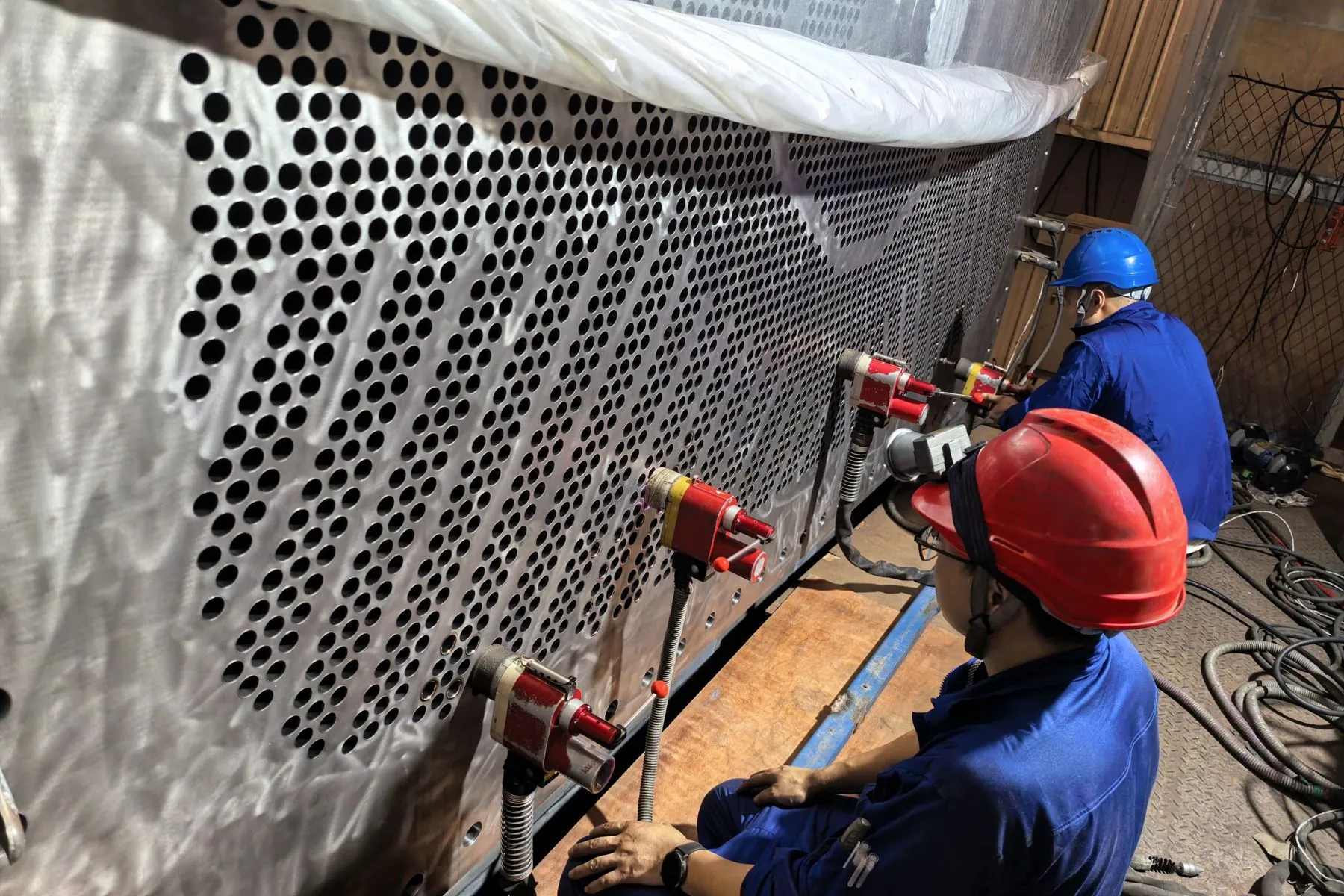
When engineers ask "what torque should I use to roll this tube?", the honest answer is that there is no universal number. Tube rolling torque depends on the tube material, the outside diameter and wall thickness, the tubesheet material and thickness, the hole finish and the expander itself. What matters in practice is two things: setting the torque correctly for the job, and then delivering that same torque on every joint. This article covers both.
What torque controls in a rolled joint
A torque-controlled tube roller drives the expander until the reaction torque reaches the set value, then stops or reverses. The torque at cut-off is a stand-in for how far the tube wall has been squeezed against the tubesheet hole. Too little and the joint may leak or loosen under thermal cycling. Too much and the tube wall is overthinned, the tube can work-harden or crack, and the ligaments between holes may deform.
The quantity that the design or the plant procedure actually specifies is usually wall reduction — the percentage by which the tube wall is thinned in the rolled zone. Torque is simply the machine setting that produces that wall reduction under the given conditions.
How to set the torque: trial rolling
Because the relationship between torque and wall reduction changes with material and geometry, the torque is set by trial rolling on a mock-up before production:
- Prepare a test block with the same tubesheet material, hole size and thickness as the real tubesheet, and use tubes from the actual batch.
- Measure before rolling. Record the tubesheet hole ID, tube OD and tube ID at the rolling zone.
- Roll at a starting torque taken from experience or from the tool supplier for that tube size, then measure the tube ID after rolling.
- Calculate wall reduction from the measured values and compare it with the required range.
- Adjust and repeat in small steps until several consecutive joints fall inside the required range.
- Record the final setting together with the tube material, OD × wall, tubesheet data, expander type and roll length, so the setting can be reproduced.
For tubes rolled at intermediate tubesheets or support plates, a tube ID gauge for rolled joints allows three-point measurement of the tube ID after rolling where a normal caliper cannot reach.
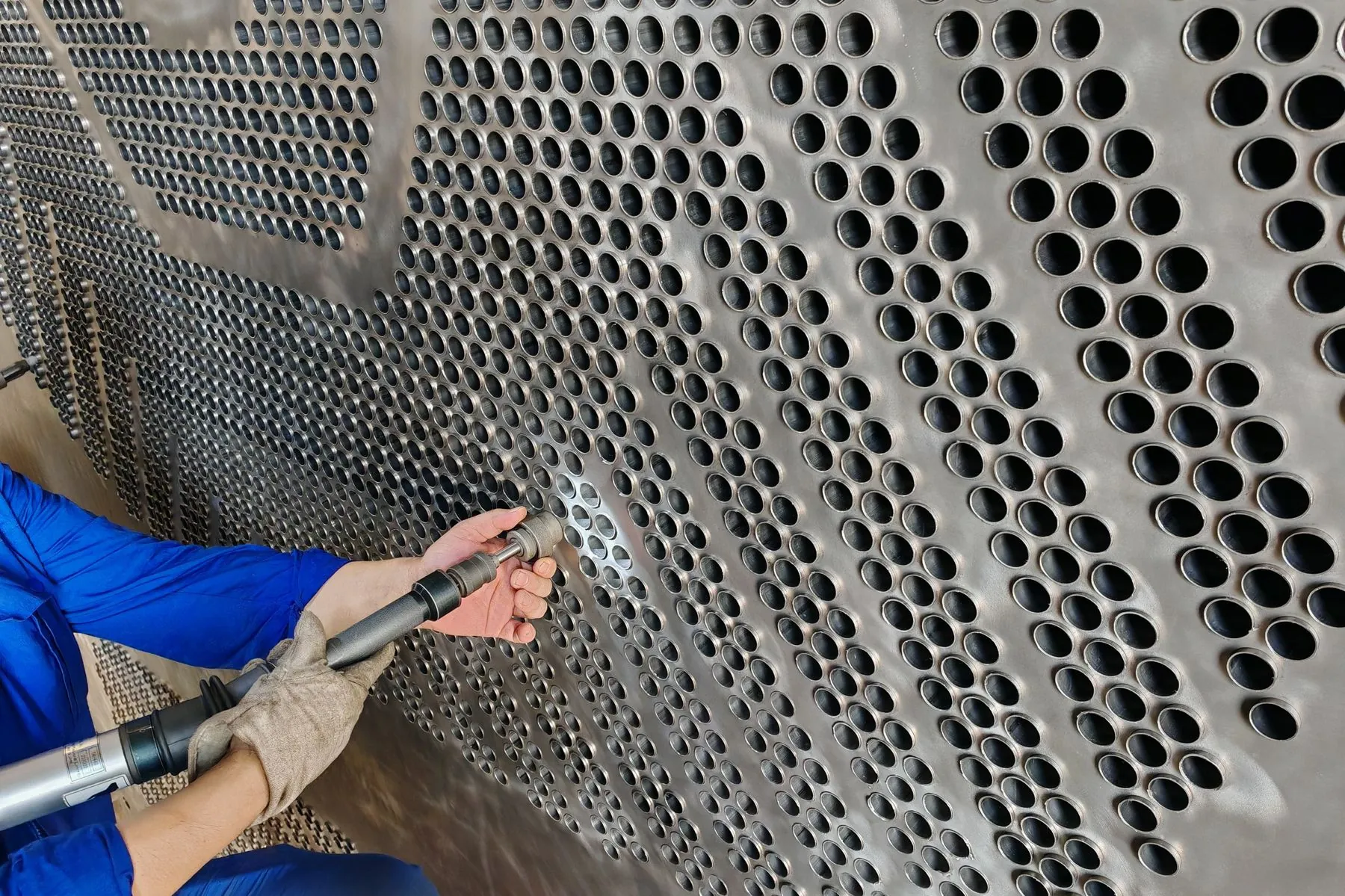
Hole condition affects the result as much as torque does. Oil, scale or burrs in the hole change friction and the final contact. Clean holes consistently before both the trial and production rolling.
Why repeatability matters more than the number
Once a torque has been proven by trial rolling, the quality question changes: is the same torque applied on every joint? A large condenser has thousands of tubes and a heat exchanger may be rolled over several shifts by different operators. Joint quality comes down to:
- Repeatability — the same torque on every joint, regardless of motor speed, supply voltage, tool temperature or who is holding the roller.
- Traceability — a record of every joint, so that any later leak can be traced back to its rolling data.
Conventional electric rollers with mechanical or current-based cut-off can drift as voltage fluctuates or as speed changes, because inertia at cut-off adds to the torque actually delivered. Servo systems address this directly.
Constant torque from servo control
Lanbo's SR Series servo tube rolling system (0.2–77.9 N·m, tube OD 6.35–38.1 mm) and XR Series high-torque servo tube roller (5–300 N·m, tube OD φ12.7–φ101.6 mm) hold constant torque at any speed and record every joint. With Lanbo's software the records can be imported into the plant's MES, so traceability is handled in the system the plant already uses.
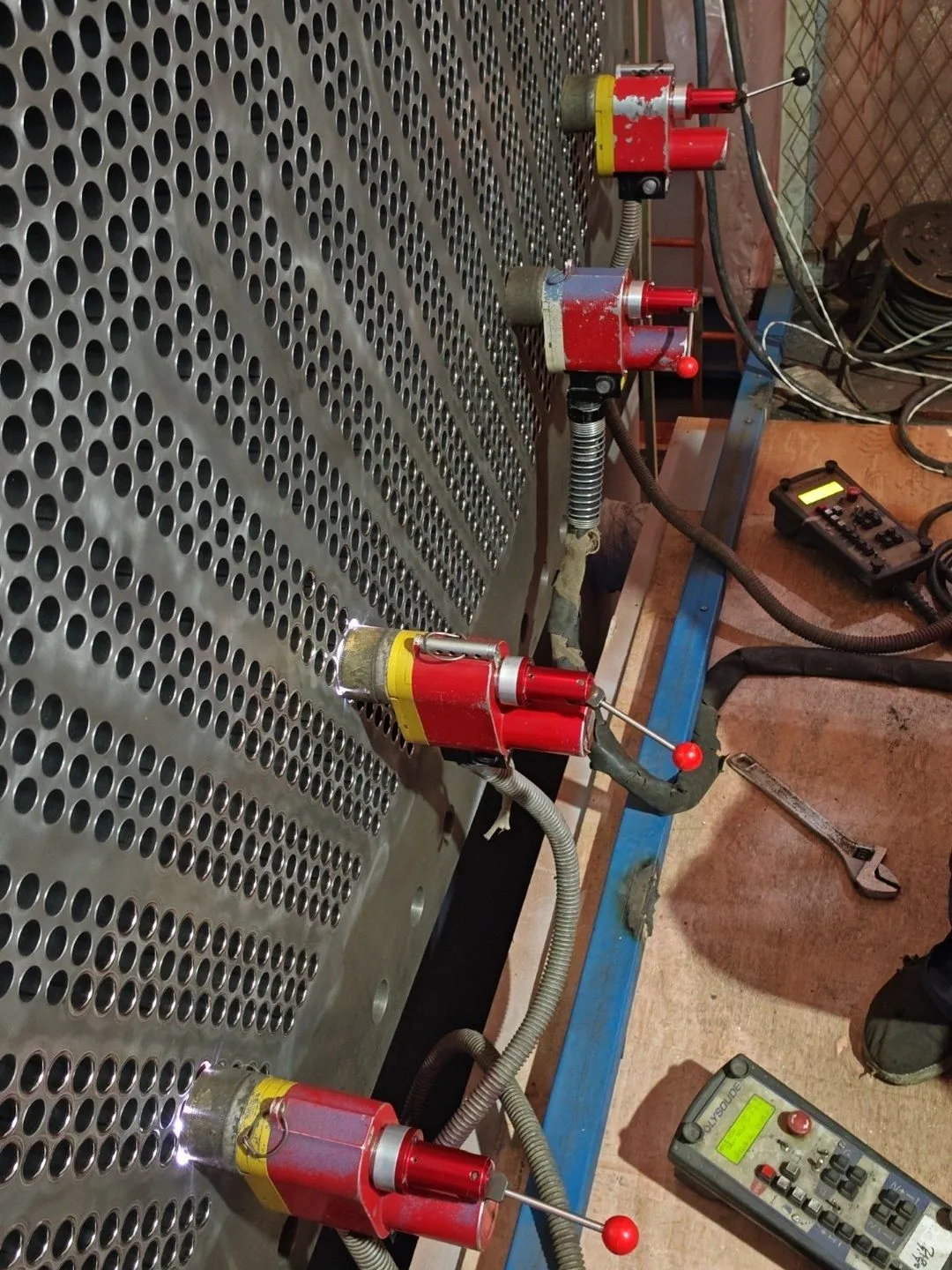
For electric rolling, the ES2 Series electric tube roller (2–100 N·m depending on motor) has a touch screen that keeps rolling records.
Checking that the set torque is the delivered torque
The torque shown on a controller is useful when the tool actually delivers it. A TQM Series dynamic torque tester measures the torque while the roller is running, which is the condition that matters for cut-off accuracy. Checking rollers before a job and at regular intervals keeps the trial-rolling setting valid through production.
Lanbo tools for this job
- SR Series Servo Tube Rolling System — constant torque and per-joint records for tubes 6.35–38.1 mm
- XR Series High-Torque Servo Tube Roller — 5–300 N·m for larger tubes
- ES2 Series Electric Tube Roller — touch-screen control with rolling records
- TQM Series Dynamic Torque Tester — checks roller torque in operation
- Tube ID Gauge for Rolled Joints — measures tube ID after rolling
If you are planning a rolling job, send us the tube material, tube OD × wall, tubesheet material and thickness, and the required wall reduction. We will suggest a roller, an expander and a starting point for trial rolling. Request a quote.
FAQ
Is there a standard torque table for tube rolling?
Supplier tables give starting values, not final settings. The working torque must be confirmed by trial rolling on a mock-up with the actual tube and tubesheet materials, measured against the required wall reduction.
Why does the same torque setting give different wall reduction on different jobs?
Wall reduction depends on tube material, wall thickness, hole clearance, hole finish, tubesheet material and expander condition. Change any of these and the torque must be re-checked by trial rolling.
How do I keep torque consistent over a multi-shift job?
Use a roller whose torque does not depend on speed or supply voltage, such as a servo system, check it with a dynamic torque tester before and during the job, and keep a record of each joint.
Can I raise the torque to fix a leaking joint?
Re-rolling at a higher torque can overthin the tube. Investigate the cause first — hole condition, wrong expander length or a set torque that was never verified — and follow the plant's repair procedure.